
Melasma Treatment in Ajax, ON
Melasma treatment in Ajax doesn’t have to be complicated.
Melasma—those stubborn brown or gray patches on your face—is treatable with the right approach. At Elegancy Beauty Bar, we use advanced laser technology and medical-grade topicals to safely fade melasma and restore your even skin tone. Our conservative treatment approach is designed to prevent darkening while delivering real results.
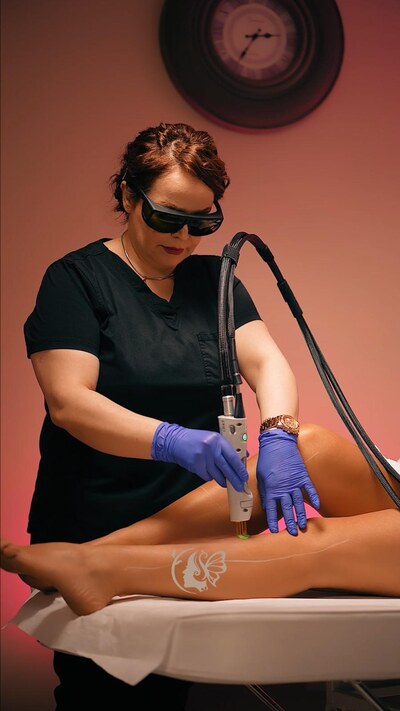
What Is Melasma & How Does Laser Treatment Help?
Melasma is a chronic pigmentation disorder characterized by symmetric brown or gray patches, typically on the face. It most commonly appears on the:
- Cheeks
- Bridge of nose and upper lip
- Forehead
- Jawline and sides of the face
Unlike age spots (which are small, isolated, and sun-related), melasma appears as larger, blotchy patches and is often triggered by hormonal changes, sun exposure, or genetic predisposition. It’s most common in women ages 20–40 with darker skin tones, though anyone can develop it.
The key difference: Melasma is a chronic condition, meaning it can recur even after successful treatment. This is why managing it long-term—through sun protection and periodic maintenance—is essential.
What Causes Melasma?
Hormonal Changes — Pregnancy, birth control pills, and hormone replacement therapy are common triggers, especially for women.
Sun Exposure — UV rays stimulate melanocyte activity and worsen existing patches. Unprotected sun exposure is the #1 factor in melasma progression.
Genetics — If a parent had melasma, your risk is significantly higher.
Skin Type — Melasma is much more common in individuals with darker or olive skin tones (Fitzpatrick Types III–VI).
Certain Medications & Skincare — Some medications and products containing irritating ingredients can trigger flare-ups.
Elegancy Beauty Bar
Upgrade Your Life
Friendly and Professional Services
Promotions & offers
Melasma Treatment Protocol at Elegancy Beauty Bar
Advanced Laser Technology for Safe Melasma Treatment: Cynosure Elite iQ Pro
We use the Cynosure Elite iQ Pro, a dual-wavelength laser with a built-in Skintel melanin reader. For melasma, we employ the 1064nm Nd:YAG wavelength at conservative settings to:
- Break down melanin clusters without excessive heat
- Penetrate deep enough to reach dermal pigment
- Minimize risk of post-inflammatory hyperpigmentation or rebound darkening
- Treat all skin tones safely
The Skintel reader measures your individual melanin levels, allowing us to customize each session for maximum safety and efficacy.
What to Expect During Treatment
- You’ll feel a mild snapping or tingling sensation as the laser targets the pigmented areas
- Our cooling technology minimizes discomfort
- No anesthesia is needed, though numbing cream can be applied if desired
- The treated area may appear slightly darker immediately after (this is normal and will fade)
Melasma Fading: Results Timeline & What to Expect
Weeks 1–2
Slight improvement; redness fades
Weeks 3–4
Noticeable lightening begins; melasma starts to fade
Months 2–3
Significant improvement as topical treatments work synergistically with laser
Months 3–6
Full results visible; patches continue to lighten with each maintenance session
Important: Results vary based on melasma severity, skin type, genetics, and adherence to sun protection. Some clients see clearing in 6 sessions; others may need 8–10.
Is Melasma Treatment Right for You?
Good candidates:
- Have melasma (confirmed by a skin specialist)
- Are committed to strict sun protection
- Understand melasma is a chronic condition requiring ongoing management
- Have realistic expectations about results

Not ideal if:
- You cannot commit to daily SPF 50+ sunscreen and sun avoidance
- You have active inflammation or skin infections in the treatment area
- You are pregnant (we recommend waiting until after pregnancy and breastfeeding)
Real Talk About Melasma
- Not dangerous: Melasma is not skin cancer and poses no health risk
- Very common: Especially in women with darker or olive skin tones
- Treatable but chronic: Modern laser technology can fade it, but it often requires ongoing management
- Prevention is key: Sun protection is your strongest defense against melasma—before, during, and after treatment
FAQ
Frequently Asked Questions about Melasma treatment
Is melasma treatment safe for darker skin tones?
Yes. Our Cynosure Elite iQ Pro laser uses conservative settings specifically calibrated for all skin types using the Skintel melanin reader, which measures your individual melanin levels and customizes energy delivery to your skin. This approach minimizes the risk of post-inflammatory hyperpigmentation or rebound darkening—complications that can occur with aggressive laser settings on darker skin. We prioritize safety over speed, which is why our protocol spreads treatment across 6–8 sessions rather than fewer aggressive sessions.
What happens if my melasma gets worse after laser treatment?
When performed with conservative settings and proper precautions, melasma should not worsen. However, if too much thermal energy is delivered or sun exposure occurs post-treatment, the melanocytes can become overstimulated, triggering rebound darkening. This is why we use low-thermal-energy settings, provide detailed sun protection instructions, and recommend topical support. Our protocol is specifically designed to avoid this complication.
How long do melasma treatment results last?
Results are long-lasting when combined with strict sun protection and periodic maintenance. With daily SPF 50+ sunscreen and annual or semi-annual touch-up sessions, most clients enjoy cleared or significantly faded melasma for years. Without sun protection, melasma typically returns within 6–12 months because UV exposure re-stimulates melanocyte activity. The key to lasting results is treating melasma as a chronic condition requiring ongoing management.
Can I treat melasma at home with topical products?
Topical depigmenting products like hydroquinone, azelaic acid, and retinoids can help lighten mild melasma over time, but they work best as support treatments alongside professional laser, not as standalone solutions. Home-only treatments are most effective for very light cases and require 6–12 months of consistent use. Professional laser treatment combined with topicals delivers significantly faster and more dramatic results—typically visible improvement within 3–4 weeks rather than months.
Is melasma treatment painful?
No. During laser treatment, you’ll feel a mild snapping or tingling sensation as the laser targets pigmented areas, but this is well-tolerated by most clients and lasts only seconds per pulse. Our Cynosure Elite iQ Pro includes built-in cooling to minimize discomfort. If you’re sensitive to sensation, we can apply a topical numbing cream beforehand at no additional cost. Post-treatment discomfort is minimal—most clients experience only mild redness that fades within hours to 2 days.