Which Acne Scar Treatment Is Right for Your Skin Type? (Ajax & GTA Guide)
Jul 8, 2026
Quick Takeaways: Matching Treatment to Your Skin Type
The right acne scar treatment for skin type starts with knowing your scar pattern, your skin tone, and which combination of treatments actually delivers results for both. Here’s what you need to know for a personalized, effective plan:
Identify your unique scar type—from ice-pick to rolling, pigmented to raised—to unlock fast, targeted solutions and avoid wasted time or disappointment.
Match treatments to your skin type and tone by choosing methods like RF microneedling for deeper tones and gentle peels for sensitive skin, ensuring both safety and visible results for every complexion.
Combination therapies drive the best outcomes—layering options like subcision, lasers, and fillers often delivers noticeably smoother texture over a series of sessions.
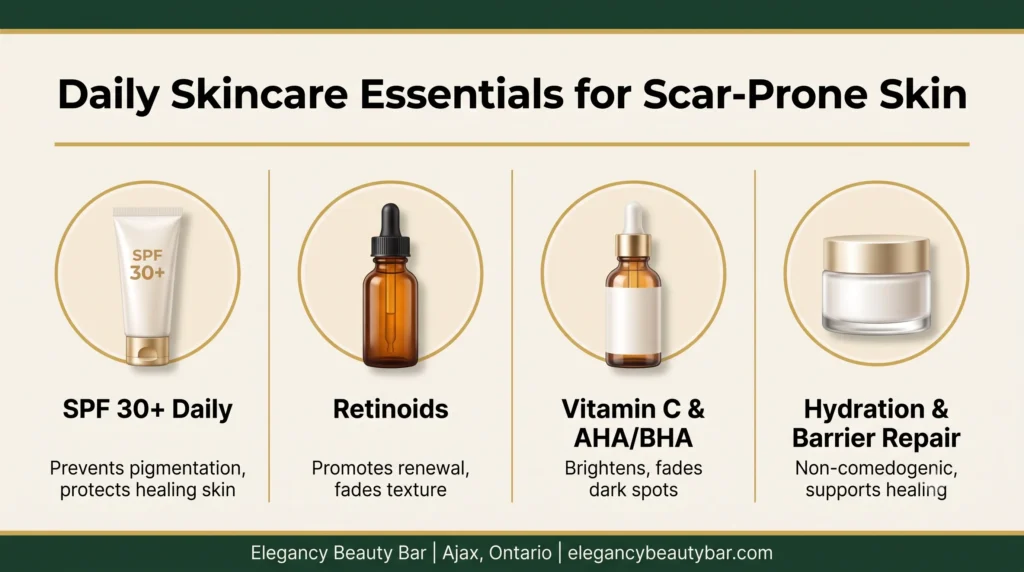
Daily sun protection and science-backed skincare—including SPF 30+, retinoids, and vitamin C—are essential for maintaining progress and preventing new pigment.
Choose professional, inclusive providers—look for clinics with certified experts, advanced technologies, and transparent consultations to ensure comfort, clarity, and personalized care.
Consistent at-home care and open provider communication keep results glowing and long-lasting.
Imagine catching your reflection and seeing smoother, brighter skin—where yesterday’s acne scars have finally softened, and your natural glow takes center stage. Finding the right acne scar treatment for your skin type is what makes that vision achievable, rather than another round of trial and error.
For so many women in Ajax and the GTA, that vision is the start of a new kind of confidence—not just flawless skin, but a sense of calm you carry into every meeting, dinner, or quiet moment for yourself.
Here’s something worth knowing: acne scarring is one of the most common aftermaths of moderate-to-severe breakouts, and how visible it becomes often depends on scar type, skin tone, and how early treatment starts. Those marks can look very different, too—depending not only on your acne history, but on your skin’s unique tone, sensitivity, and care needs.
Your journey isn’t one-size-fits-all. From the frustration of stubborn pigment spots to textured scars that seem impossible to cover, the right solution needs to feel as personal and thoughtful as any spa ritual.
What’s changed in 2026? Gone are the days of “one laser fits all.” Breakthrough combinations like RF microneedling, gentle targeted lasers, and advanced topical serums now blend clinical results with the comfort and pampering experience you expect.
A modern, skin-type-matched acne scar program isn’t just about erasing marks—it’s about:
Empowering you with knowledge and options for every skin type
Celebrating every skin tone with treatments proven safe and effective for all
Delivering real results in a welcoming, tranquil space where care and expertise meet
Whether you’re managing the memory of teen breakouts, balancing a busy schedule, or stepping into your first beauty clinic appointment, you deserve a journey that honors your skin type and delivers radiant, tangible results.
Curious about how your exact scar type and skin profile shape your choices? Let’s explore the unique challenges and solutions for every scar, so you can discover the perfect path to even, luminous skin.
Acne Scar Types Explained: Which One Do You Have?
Acne scarring is rarely one-size-fits-all—identifying your scar type is the first crucial step to achieving the smooth, even skin you deserve.
The right treatment depends on whether your scars are atrophic (depressed), raised, or pigment-based. Correctly labeling your scar means faster, more effective results—and can spare you wasted time, money, and disappointment.
Scar Type
Category
Best Treatment Options
Ice-Pick
Atrophic
TCA CROSS, punch excision
Boxcar
Atrophic
Fractional laser, dermal fillers
Rolling
Atrophic
Subcision, RF microneedling
Hypertrophic
Raised
Steroid injections, silicone gel
Keloid
Raised
Steroid injections, cryotherapy, vascular laser
Post-Inflammatory Hyperpigmentation (PIH)
Pigment-Based
Superficial peels, brightening topicals
Erythema
Pigment-Based
Vascular laser, IPL
Treatment suitability depends on individual skin assessment. Book a consultation with Elegancy Beauty Bar to determine the right protocol for your scars.
Ice-pick scars: Tiny, deep pits that look like pinpricks—these are especially stubborn and often require specialized procedures like TCA CROSS or punch excision.
Boxcar scars: Broad, sharply defined depressions—think “scooped out” areas, commonly improved with fractional laser or fillers.
Rolling scars: Wavy, shallow valleys that catch the light—a hallmark of deeper textural change, often seen in those with a history of severe inflamed acne.
Some ethnicities, especially those with deeper skin tones, may experience more rolling or mixed scar types, shaping which treatments are safest and most effective.
Raised Scars: When Skin Grows Back Too Much
Raised scars signal a different healing process.
Hypertrophic scars: Firm, raised marks that stay within the borders of your original breakout.
Keloid scars: Thicker, expanding scars that go beyond the acne site—more common in darker skin tones and often found on the jaw, chest, and back.
Clients often share how these scars can impact self-confidence, especially when they’re visible. Fortunately, modern steroid injections, silicone gels, and vascular lasers offer relief and hope.
Pigment-Based Marks: The Color That Lingers
Not all acne aftermath is about texture—many struggle with color changes that alter skin tone long after bumps disappear.
Post-inflammatory hyperpigmentation (PIH): Brown or black spots, especially persistent in medium-to-deep skin tones; they can linger for months.
Erythema: Pink or red marks commonly seen in lighter complexions; while not true scars, they noticeably affect skin’s clarity.
Topical brighteners, gentle peels, and targeted lasers tackle these color changes, restoring an even glow without downtime.
Common Acne Scar Myths, Debunked
Many mistakenly believe “acne scar” means only deep pits, or that nothing besides laser can help. The truth? Scientifically tailored combinations—like fillers, microneedling, and peels—open far more options today.
Every scar has a story—understanding yours unlocks the right solution. Getting an expert assessment, not just a product, is the fastest path to real results and true confidence.
How Skin Type and Tone Shape Treatment Success
Every acne scar journey is different—your skin type and tone are the map.
The most effective solution for one client may be less ideal for another, and that’s why personalization is essential.
Skin “types” usually fall into four groups: oily, dry, sensitive, and combination. “Tones” are described using the Fitzpatrick I–VI scale, ranging from fair tones to deep, richly pigmented complexions.
Healing, side effects, and treatment results shift based on these factors. For example, deeper tones may be more likely to develop pigmentation changes, while sensitive skin may react with irritation to harsh ingredients.
Whether your skin is dewy or delicate, porcelain or espresso, the right treatment is out there—and the first step is understanding your own skin’s needs. The most beautiful results come from customized care that celebrates you.
State-of-the-Art Professional Treatments for Every Scar and Skin Type
When it comes to acne scar transformation in 2026, there’s no one-size-fits-all solution—personalized plans lead the way. Treatments now blend science with spa-level comfort, focusing on your unique skin type and scar pattern for truly radiant results.
Focal and Surgical Approaches
For deep, stubborn scars, targeted techniques offer dramatic improvements with careful precision.
TCA CROSS: A go-to for ice-pick scars, this method uses a pinpoint application of high-strength TCA to help fill deep pits over a series of sessions. With expert hands, it’s an option even for darker skin.
Punch excision/grafting: For extremely deep or narrow scars, tiny punches remove the scar, then close or graft it, often followed by laser for seamless blending.
Subcision: The go-to for rolling or tethered scars—a blunt needle frees skin tension, then optional fillers or lasers enhance smoothness.
Resurfacing and Regenerative Devices
Today’s most advanced devices bring clinic-level power with less downtime and more natural-feeling skin.
Fractional ablative lasers (CO₂, Er:YAG): Suited for moderate to deep boxcar or rolling scars, with lighter settings to help minimize risk for diverse skin tones.
RF microneedling (Candela Matrix): Safe for every skin tone, this device treats rolling and boxcar scars with a deep collagen boost and skin-tightening effect. Learn more about our Candela Matrix RF microneedling treatments.
Microneedling + PRP/PRF: With platelet-rich plasma, this method softly remodels scars with visible improvements over a series of sessions.
Chemical and Injectable Solutions
For subtle blending or lifting, non-surgical solutions can offer both quick wins and lasting change.
Medium-depth chemical peels (TCA, glycolic): Smooths shallow scars for all skin types; ideal for blending unevenness over a few visits. See our chemical peel treatments for pricing and details.
Dermal fillers (HA, PLLA, PMMA): Instantly raise depressed scars—HA for short-term radiance or PMMA for a longer-lasting boost.
Steroid injections, silicone gels, vascular lasers: Target hypertrophic or keloid scars to flatten, soften, and reduce redness.
Cryotherapy: Shrinks stubborn, raised scars—best performed by an experienced specialist.
Pigment and Red Mark Corrections
Treatments for color changes are gentle but powerful—think of them as “polish” for finishing touches.
Superficial peels (salicylic, glycolic, lactic): Fade brown marks (PIH) and brighten tired skin; approached with care for every skin tone.
Vascular lasers and IPL: Address persistent redness or dark marks—PDL/KTP lasers are tailored for your skin’s tone and sensitivity.
For the most transformative results, our team layers these tools—personalizing every protocol for you. Combining targeted treatments not only maximizes safety and results, but gives every client a fully tailored, elegant journey to smoother, brighter skin.
Explore our acne scar removal treatments in Ajax to see the full range of options available.
Combination Treatment Plans by Scar Type and Skin Tone
Modern acne scar care isn’t about a single miracle procedure—it’s about tailored, multi-step plans that deliver truly transformative results for every unique client.
Personalization is the gold standard in 2026, with experienced specialists blending techniques to address scar type, skin tone, and lifestyle—all while keeping the experience comfortable and empowering.
Sample Treatment Protocols by Scar Pattern and Skin Tone
Picture this: you walk into a treatment room that feels like a serene escape, where your provider recommends a customized plan designed for your exact skin needs. Here’s how a plan might look for common scenarios:
Protocols are illustrative starting points — your actual plan is built around your specific scar type, skin tone, and goals during a one-on-one consultation.
Why Combination Therapy Works Best
Experienced professionals use sequenced combinations because complex scars and diverse skin tones demand more than a one-size-fits-all solution.
Sequential plans (e.g., subcision first, laser second, filler last) boost collagen, maximize safety, and support long-term results.
Simultaneous therapies can fast-track results with careful calibration and downtime management.
Safety first: each approach is thoughtfully adjusted to minimize pigment risks, especially for Fitzpatrick III–VI.
Before-and-after photos and expert follow-ups help you see progress at every stage.
Setting Realistic Timelines and Tracking Progress
Setting realistic goals and keeping expectations clear are keys to a satisfying transformation.
Our team helps you set timelines for combination protocols, track milestone improvements with photos, and fine-tune treatments based on how your skin responds.
Open, supportive consultations reassure you that your story and results matter.
Maintenance, At-Home Care, and Ongoing Prevention
Supporting your in-clinic acne scar treatments with a consistent, thoughtful home routine is the secret to lasting radiance and confidence.
Daily skin health isn’t just maintenance—it’s the foundation for preserving those professional results and preventing new scars or pigment from forming.
Core Skincare Components for Scar-Prone Skin
Anyone with a history of acne scarring can benefit from a simple, science-backed regimen:
Retinoids (prescription or OTC): Promote skin renewal and fade uneven texture—especially important after laser, microneedling, or filler procedures.
AHAs/BHAs and vitamin C: Gently resurface, brighten, and fade dark spots; azelaic acid is especially good for persistent pigmentation in deeper skin tones.
Hydration and barrier repair: Use a professional-grade, non-comedogenic moisturizer—lightweight gels for oily skin or richer creams for drier types.
Stick with products recommended by your provider—these are proven non-comedogenic and result-supporting for all skin tones.
Supporting Professional Treatments
Priming your skin at home sets the stage for smoother in-clinic results and shorter downtime.
Pause strong actives (retinoids, acids) 3–5 days before major procedures
Keep skin moisturized and calm leading up to your appointment
Avoid at-home “miracle” lasers or dermarollers unless cleared by your provider—too often these cause irritation, not improvement
Open communication is powerful. Share your current products at each visit—it allows your provider to optimize your plan and prevent unwanted reactions.
Lifestyle Habits That Support Healing
Lasting improvement means tending to your whole well-being, not just your skin.
Prioritize restorative sleep and stress relief
Nourish your body: a diet rich in antioxidants (berries, leafy greens, healthy fats) helps skin repair itself from the inside
Celebrate small wins: keep a progress journal or take monthly photos to track every positive change
Consistency with your skincare, honest conversations with your provider, and daily self-kindness are your most effective tools for healing and maintaining beautiful skin.
Safety, Costs, and Choosing the Right Provider
Feeling confident about your acne scar journey starts well before your first appointment. Let’s break down how to make safe, empowered choices that fit your unique needs and lifestyle.
Safety Considerations for Every Skin Tone and Type
Choosing an experienced provider can mean the difference between smooth, radiant skin and unnecessary setbacks. Look for clinics and professionals who:
Specialize in your specific skin type or tone—especially important for darker (Fitzpatrick III–VI) and sensitive skin
Use evidence-based protocols and the latest, safest technologies
Offer detailed consultations with clear explanations of risks, recovery, and aftercare
Every procedure carries its own recovery profile: RF microneedling or microneedling + PRP typically means mild redness for 24–48 hours with minimal downtime; ablative lasers bring stronger improvement but more recovery time; steroid injections or peels involve minimal immediate impact but gradual visible change.
For all skin tones, ask about strategies for preventing pigment changes (like PIH), request before-and-after photos of clients with skin similar to yours, and never feel rushed—your comfort and understanding always come first.
Acne Scar Treatment Costs in Ajax and the GTA
Investing in professional treatments is a commitment to yourself—but it should always feel transparent and manageable.
Pricing across the GTA varies by treatment type, session count, and area treated. Consider your own goals: single, targeted treatments are great for mild scarring, while comprehensive packages usually offer better value and lasting results for complex cases. We provide personalized consultations to walk through options and pricing that suit your goals and budget. For a detailed breakdown, see our RF microneedling cost guide.
Aesthetic treatments are generally not covered by OHIP, but some extended benefits or FSA accounts may apply for medically necessary procedures—always check with your provider.
The Elegancy Beauty Bar Approach to Personalized Care
At Elegancy Beauty Bar, personal attention is our signature. From your welcome beverage to your custom treatment plan, everything is designed to honour your individuality and celebrate your progress.
Here’s what sets our approach apart:
Certified, compassionate professionals with experience across diverse skin types and tones
Advanced devices, including our Candela Matrix RF microneedling platform, used thoughtfully across all complexions
Personalized consultation: every client receives an in-depth analysis before any procedure
Transparent communication: no hidden fees, no pressure, just options that suit your lifestyle and goals
Diversity isn’t an afterthought—it’s woven into every protocol, image, and interaction so you always feel seen, heard, and understood.
Knowing your options, setting smart expectations, and partnering with the right provider puts you in control—so your journey to smoother, more radiant skin is as relaxing and rewarding as the results themselves.
Your Next Step Toward Smoother, Scar-Free Skin
Choosing the right acne scar treatment for your skin type isn’t just about erasing the past—it’s about revealing the confident, radiant skin you deserve. With today’s advanced techniques, every skin tone and type can find a safe, effective, and personalized path to smoother, brighter skin.
You’re never limited by one option; your journey is guided by expertise, compassion, and innovation—crafted to fit your unique needs, lifestyle, and beauty goals.
To recap: seek an expert consultation for a thorough, personalized assessment; prioritize treatments tailored for your unique skin tone, especially if you have deeper or sensitive skin; commit to daily SPF and barrier-supportive home care; and ask your provider for before-and-after evidence so you can feel confident about the journey ahead.
Review your daily skincare routine and swap in expert-recommended, non-comedogenic essentials.
Capture your “before” photo—then celebrate every milestone as your journey progresses.
Reach out for support and guidance; you’re never alone, and progress is always possible.
Your story isn’t defined by scars—but by your courage to seek transformation. Contact Elegancy Beauty Bar in Ajax to begin your personalized acne scar treatment plan today.
Frequently Asked Questions About Acne Scar Treatment by Skin Type
What is the best acne scar treatment for my skin type?
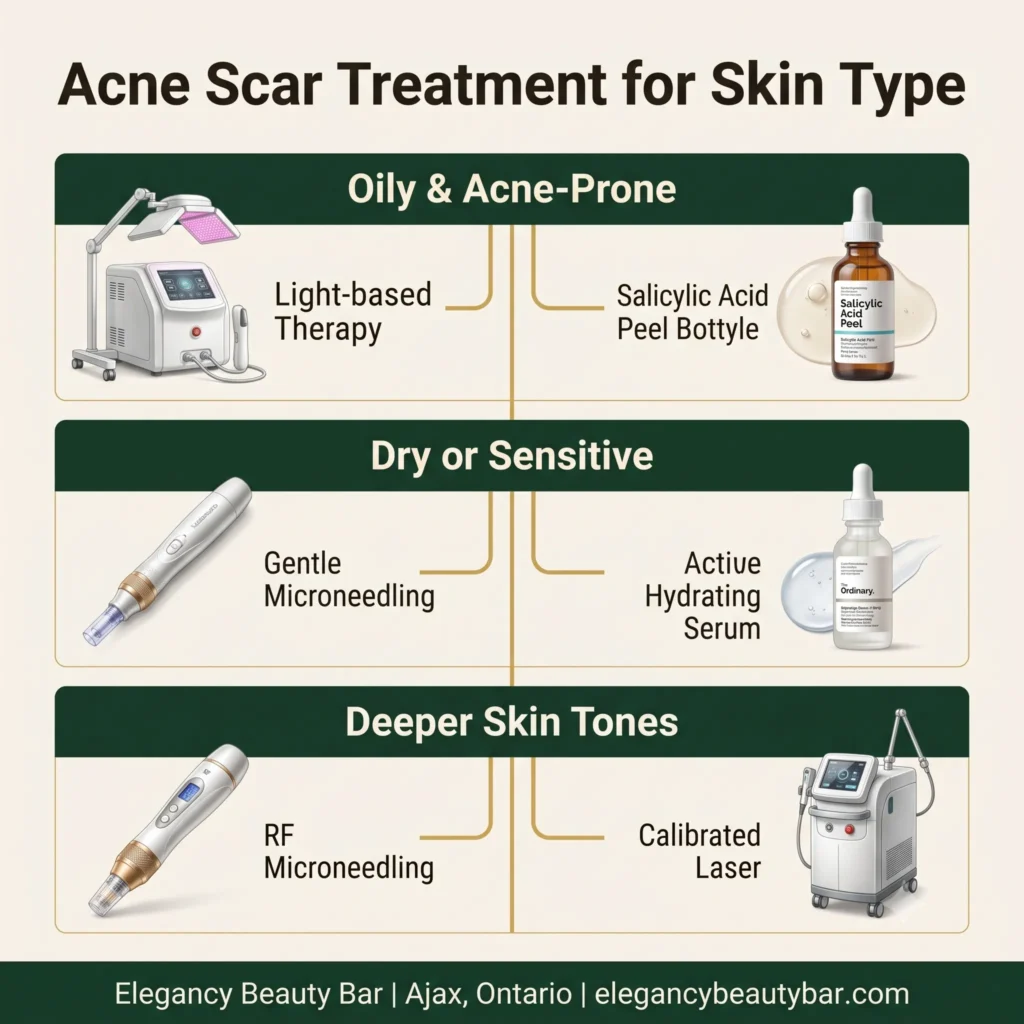
The best acne scar treatment for your skin type depends on both your scar pattern and your skin’s tone and sensitivity. Oily, acne-prone skin often responds well to light-based therapies and salicylic acid peels, dry or sensitive skin does best with gentle microneedling or mild chemical peels, and deeper skin tones typically see the safest results with RF microneedling and carefully calibrated lasers. A personalized consultation is the most reliable way to match treatment to your exact skin profile.
Is RF microneedling safe for acne scars on darker skin tones?
Yes. RF microneedling is considered one of the safer options for Fitzpatrick III–VI skin tones because the radiofrequency energy targets the deeper skin layers while leaving the surface largely intact, which lowers the risk of post-inflammatory hyperpigmentation compared to some ablative lasers.
Can sensitive skin get acne scar treatment safely?
Sensitive skin can absolutely be treated for acne scars, but the approach needs to be gentler. Conservative RF microneedling settings, lactic or mandelic acid peels, and microneedling with or without PRP tend to be well tolerated, paired with a calming, fragrance-free post-care routine.
How do I know what type of acne scar I have?
Acne scars generally fall into three categories: atrophic (ice-pick, boxcar, or rolling depressions), raised (hypertrophic or keloid), and pigment-based (post-inflammatory hyperpigmentation or erythema). A provider can usually identify your scar type during a visual skin assessment, which is the starting point for building your treatment plan.
How many sessions does acne scar treatment take to see results?
This varies by scar type, skin tone, and treatment chosen. Combination protocols that layer treatments like subcision, lasers, or microneedling typically show visible improvement over a series of sessions spaced several weeks apart, with continued collagen-driven improvement for months afterward.
Does acne scar treatment work for oily skin?
Yes — oily, acne-prone skin generally responds well to light-based therapies, salicylic acid peels, and microneedling, all of which improve scar texture without the heavier creams that can worsen congestion. Non-comedogenic aftercare products help maintain results without triggering new breakouts.
Is acne scar treatment covered by OHIP or insurance in Ontario?
Aesthetic acne scar treatments are generally not covered by OHIP, since they’re considered cosmetic rather than medically necessary. Some extended health benefits or FSA accounts may apply in specific cases, so it’s worth checking directly with your provider and insurer.