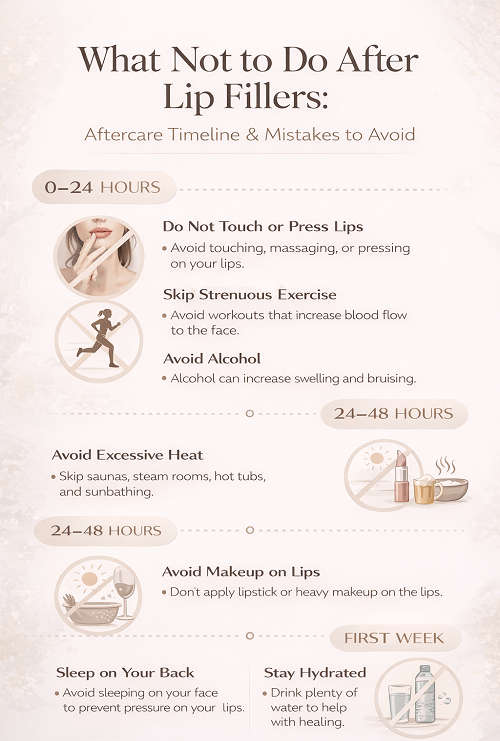
What not to do after lip fillers is just as important as the treatment itself, because the first few days of aftercare directly impact swelling, symmetry, and long-term results.

  • Avoid touching or massaging freshly filled lips for the first 24–48 hours to prevent infection, swelling, and filler displacement—opt for gentle cold compresses instead.
  • Skip strenuous exercise, hot drinks, and saunas for at least 48 hours, as heat and increased blood flow can magnify swelling and compromise your final look.
  • Say no to alcohol, caffeine, salty foods, and smoking in the early days to minimize bruising and promote faster, healthier healing.
  • Hold off on makeup, harsh skincare, and lip products for 24–48 hours to keep the lip area clean, calm, and free from bacteria or irritation.
  • Prioritize head elevation and gentle habits by sleeping with 2 pillows and avoiding side or stomach sleeping to support even filler settling and natural symmetry.
  • Hydrate consistently with 8–10 glasses of water daily and use a fragrance-free, protective balm to keep lips plump, comfortable, and resilient.
  • Always follow your certified provider’s personalized aftercare instructions and book your 2-week follow-up for assessment and long-term results.
  • Transform aftercare into a daily self-love ritual—every mindful step protects your investment and elevates your comfort and confidence.

Thoughtful aftercare is the secret to stunning, confidence-boosting lips—explore the full guide to master every step of your recovery and reveal your most beautiful smile.

Introduction

Ever noticed how the tiniest habits after your lip filler session can make all the difference between flawless, natural results and days of unnecessary swelling or discomfort?

You deserve the kind of glow that lasts—without the guesswork or post-treatment regrets.

At Elegancy Beauty Bar, our clients often tell us they’re surprised to learn that nearly 80% of undesirable lip filler outcomes trace back to simple aftercare mistakes—things as small as sipping that first morning coffee or forgetting to keep hands away from freshly plumped lips.

It happens to everyone: After a long-awaited enhancement, it’s tempting to rush back to your normal routine. But your lips need their own moment of TLC to ensure they settle soft, smooth, and symmetrical.

The truth is, mastering aftercare isn’t just about what you should do—it’s about what not to do in those crucial hours and days. And the wrong move can lead to:

  • Persistent swelling or uneven results
  • Unexpected bruising or discomfort
  • Delayed healing that steals your confidence

Whether you’re a first-timer, a busy professional squeezing in self-care between commitments, or someone who wants results worthy of the red carpet, aftercare is your secret weapon.

In this guide, you’ll find expert-backed tips that empower you to:

  • Safeguard your results with small but mighty choices
  • Turn aftercare into a luxurious, calming ritual (not a set of restrictions)
  • Avoid the most common, completely preventable mistakes after lip fillers

The difference between a forgettable filler and a confidence-boosting transformation lies in a few mindful habits anyone can master.

Ready to protect your gorgeous new lips and enjoy your beauty investment for months to come?

You’re about to discover the essential do’s, don’ts, and gentle rituals that give your lips—and your self-assurance—the best possible start.

Understanding Lip Filler Aftercare: Protecting Your Results

Lip filler aftercare isn’t just a suggestion—it’s the foundation for beautiful, lasting results.

Right after your treatment, your lips are especially delicate. Hyaluronic acid fillers (the most popular type) need time to settle and blend with your natural tissues. For the first 24-72 hours, even everyday habits can influence your outcome.

Picture this: You’ve invested in plumper, perfectly shaped lips—it only takes a few simple choices post-procedure to keep them at their best.

Why Aftercare Matters From Day One

Without attentive aftercare, you risk:

  • Infection: Microscopic puncture points can allow bacteria in.
  • Migration or asymmetry: Touching, sleeping incorrectly, or exercising too soon can shift filler.
  • Delayed healing and increased bruising or swelling.

Complications are rare but more likely if aftercare slips. Even using a straw or hot drink before you’re ready can undo your injector’s artistry.

Know Your Healing Timeline

Recovery is typically straightforward:

  1. First hours: Mild swelling, redness, or tenderness is common.
  2. Days 1–3: Swelling peaks by day 2, then steadily improves.
  3. By week 2: Most swelling and bruises resolve, and results look soft and natural.

Staying patient and following instructions helps you avoid frustration and enjoy your new look sooner.

Transform “What Not to Do” Into a Self-Care Ritual

Flip the script: instead of seeing aftercare as a restriction, view it as pampering your investment.

This means embracing:

  • No touching, rubbing, hot drinks, or strenuous movement for the first 24–48 hours.
  • Frequent gentle hydration and appropriate cold compresses to minimize swelling.
  • Sleeping with your head elevated to encourage even filler settling.
  • Avoiding makeup and harsh products around lips until your provider gives the green light.

Empower Your Results and Everyday Confidence

Every aftercare decision is a way to invest in yourself.

The main takeaway: Approach each step like a luxurious, personalized ritual—your confidence, comfort, and best outcome depend on it. Small choices in the hours and days after your appointment make all the difference in how you look and feel for months ahead.

Common Mistakes to Avoid After Lip Fillers

Touching, Massaging, or Manipulating The Lips

Curious fingertips can undo your results in seconds. Right after your session, your lips are extra sensitive—hyaluronic acid fillers are easily displaced and tiny puncture sites are open.

Never:

  • Touch, rub, or massage your lips for 24-48 hours
  • Use unwashed hands near your mouth
  • Attempt to smooth bumps unless your provider specifically instructs you

If you feel discomfort or tingling, opt for a gentle cold compress (wrapped in a soft cloth) instead of a massage. “The biggest risk is introducing bacteria, causing unwanted lumps, or misplacing new filler,” says our senior injector.

Engaging in Strenuous Activities or Exercise

The surge in blood flow caused by intense workouts can increase swelling and push your filler out of position.

Skip these activities for 24-72 hours:

  • Aerobic exercise (running, spin class)
  • Yoga, pilates, or stretching classes
  • Heavy lifting at the gym

Instead, take relaxing walks or gentle movements at home until your provider gives the green light. Picture this: fresh lips, peaceful stroll, no extra swelling.

Consuming Alcohol, Caffeine, or Using Tobacco

Alcohol and caffeine both thin the blood and dehydrate, increasing bruising and swelling—while smoking reduces oxygen, which can delay healing.

Avoid for 24-48 hours post-filler:

  • All alcoholic beverages
  • Coffee, energy drinks, and strong teas
  • Cigarettes, vapes, and cigars

Hydrate with lemon-infused water or calming herbal teas to support your lips and avoid obstacles to smooth healing.

Exposure to Heat, Sun, and Saunas

Heat speeds up swelling and can cause filler to break down faster.

Steer clear of for at least 48 hours:

  • Hot drinks and spicy soups
  • Hot showers, saunas, hot tubs, and tanning beds
  • Direct sunbathing or heat lamps

After two days, start using a high-SPF lip balm before sun exposure. “Always treat your lips with as much spf love as your face,” our clinicians advise.

Using Makeup, Skincare, or Lip Products Prematurely

Applying products can introduce bacteria or irritate new filler.

Hold off for the first 24-48 hours on:

  • Lipsticks, glosses, or balms (unless fragrance-free and provider-approved)
  • Exfoliating or medicated lip treatments
  • Facial cleansers that foam or contain acids

Keep lips clean with gentle patting using warm water and avoid harsh ingredients like fragrances or acids.

Eating Salty, Spicy Foods or Using Straws

Salty and spicy foods draw water to the lips, worsening swelling and discomfort, while straws and big bites can shift filler.

For the first two days, avoid:

  • High-sodium snacks, chili, or pepper sauces
  • Using straws, taking oversized bites, or chewing gum

Choose gentle foods like yogurt, soft berries, smoothies (sipped, not sucked), and scrambled eggs.

Sleeping Flat or Applying Pressure to the Lips

Proper sleep is vital to prevent filler migration or “dent lines.” Sleeping flat or on your face presses the lips, impacting results.

Best practices:

  • Sleep with your head elevated (propped with 2 pillows) for 1-2 nights
  • Avoid side and stomach sleeping
  • Keep hands and objects away from lips overnight

“The way you sleep tonight shows up in your results tomorrow,” says our aftercare nurse.

Overdoing Touch-Ups or Ignoring Assessment Timelines

Rushing for perfection can backfire. Too-frequent lip injections cause lumpiness, unnatural fullness, or migration.

Essential guidelines:

  • Wait at least 2 weeks before scheduling touch-ups
  • Rely on your aesthetics provider to guide the right intervals
  • Avoid “topping up” yourself or after only minor swelling goes down

Trust the professional timeline—the most beautiful lips require patience and expert planning.

Your aftercare choices are the secret to maintaining volume and symmetry, prolonging the beauty and health of your results. Picture yourself confidently smiling, knowing you protected your investment with these smart, simple habits.

Optimal Aftercare Habits: What to Do Instead

Applying Cold Compresses Safely

A cold compress is your best friend for the first 24 hours after lip filler. It’s a secret weapon for reducing swelling and bruising, delivering comfort and control right when you need it most.

For best results:

  • Wrap ice in a clean cloth or use a gel pack—never press ice directly on your lips.
  • Apply cold compresses for 10-15 minutes every hour on the first day.
  • Use light pressure only, as pressing too hard can move the filler.

If you feel increased pain, persistent numbness, or severe discoloration, stop immediately and call your provider.

“Picture this: gentle, cool fabric soothing your lips as you relax—luxury and healing in a single moment.”

Staying Hydrated and Nourished

Hydration is everything when it comes to maintaining lip plumpness. Hyaluronic acid fillers bind with water, so you want to sip smart.

  • Aim for 8-10 glasses of water daily to support moisture and decrease swelling.
  • Look for signs of dehydration: headache, dry mouth, or fatigue.
  • Nourish with foods rich in vitamin C and healthy fats to encourage healing.

Swap caffeinated drinks for herbal teas—the calmer your system, the better your recovery.

“You’re not just drinking water; you’re plumping your pout with every sip.”

Gentle Lip Moisturizing and Cleansing

The lips deserve tender love and care. The right product and touch make all the difference.

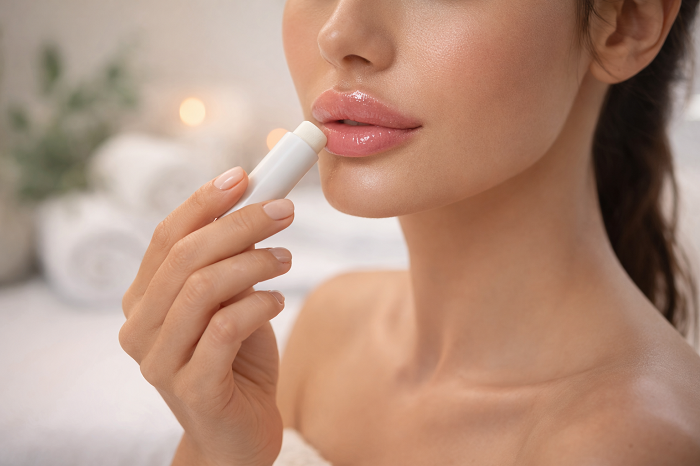
  • Use a fragrance-free, protective balm (think Aquaphor or plain Vaseline).
  • Moisturize after every meal and whenever lips feel dry.
  • Begin gentle cleansing after 24 hours with mild soap and lukewarm water—always pat, don’t scrub.

Choose clean cotton for patting lips dry, and always keep hands extra clean.

Promoting Even Healing and Filler Longevity

Set yourself up for excellence beyond just the first days.

  • Sleep with your head elevated on two pillows and avoid sleeping on your face for 2 nights.
  • Minimize talking, kissing, and exaggerated facial movements for 24-48 hours.
  • Practice healthy habits: a balanced diet, no smoking, and limit alcohol.

Healthy lifestyle choices aren’t just for you—they’re the secret to lasting, natural-looking lip enhancement.

Monitoring for Complications and When to Contact Your Provider

It’s normal for lips to look slightly swollen, red, or tender for 1-7 days.

Watch for:

  • Severe, worsening pain
  • Unusual lumps, blanching (white patches), or spreading redness
  • Prolonged bruising or fever

When in doubt, reach out—your injector is your number-one resource for guidance and peace of mind. “Open, ongoing communication keeps little concerns from becoming big problems.”

Taking these simple, nurturing steps means not just protecting your investment, but giving your lips the best possible chance to heal beautifully. Self-care is the secret to confident, natural results—treat your aftercare as a daily act of self-love and you’ll notice the difference every time you smile.

Personalized Aftercare: Making the Most of Your Lip Filler Experience

Navigating Provider Instructions and Individual Variations

Every lip filler journey is unique—your provider’s guidance is gold.

Always follow bespoke advice from your injector, because aftercare can differ based on:

  • Skin type or sensitivity
  • Previous history of allergies or swelling
  • Personal lifestyle (active vs. sedentary)
  • Specific filler product used
  • Underlying health conditions

Picture this: Your friend’s “one-size-fits-all” tip from her treatment may not match your own needs or your injector’s expert recommendations.

Make your recovery even more personal by:

  • Jotting down how you feel day by day—note swelling, bruising, and comfort
  • Taking selfies in natural light to track progress for future visits
  • Listing any products or routines that work well (or less so)

Having a recovery log means your next consultation can be even more individualized.

“Your aftercare story is the key to next-level results.”

Scheduling Follow-Ups and Ongoing Maintenance

Did you know: Over 90% of optimal lip filler outcomes rely on follow-up appointments and tailored maintenance instead of just the initial injection?

Block your 2-week review now—it’s the golden window for:

  • Assessing symmetry and shape
  • Addressing any unevenness or concerns
  • Mapping out future touch-up plans

For long-term beauty that lasts, build these into your routine:

  • Apply SPF lip balm daily after the first 24 hours (protects results and skin health)
  • Hydrate with 8-10 glasses of water to maximize hyaluronic acid filler’s effect
  • Avoid tobacco, excessive alcohol, and sun exposure

Plan touch-ups every 6–12 months, monitoring at 70% fullness so you always look naturally refreshed.

“Follow-ups are the cornerstone of your confidence—never skip them!”

Creating Your Self-Care Ritual

Transform aftercare from checklist to cherished ritual—this is your “spa at home” moment.

Try weaving care into your daily life with:

  • Ten slow, mindful minutes of gentle balm application—make it a sensory treat with fragrance-free formulas
  • Setting up a calming playlist while you rest elevated (music counts as healing too)
  • Sipping herbal tea, journaling, or meditating as part of your downtime

The shift isn’t just about smoother lips or faster recovery—it’s about celebrating transformation and honoring self-care.

“When you treat your healing time as sacred, your results (and confidence) shine even brighter.”

Remember, your lip filler experience is uniquely yours—personalizing your aftercare ensures both visible beauty and inner well-being long after you leave the clinic.

Frequently Asked Questions: Lip Filler Aftercare Myths and Realities

Curious about what’s really safe—and what’s pure myth—when it comes to lip filler aftercare? Let’s set the record straight with real, approachable advice you can use today.

Quick Fixes & “Miracle” Myths

The temptation for a shortcut is real, especially when you’re busy and want to look your best fast.

  • There’s no magic cream that will instantly reduce swelling—ice packs (10-15 minutes every hour, wrapped, not direct) remain the gold standard.
  • “If I massage the lumps right away, they’ll disappear sooner”: In reality, touching or massaging your lips too early can disrupt your results or introduce infection. Always wait for your provider’s go-ahead (often 48+ hours).

Remember: healing takes time. Swelling naturally peaks at 1-2 days, with most results settling by week two.

When Can I…? (Real-Life Scenarios)

Wondering how soon you can resume your favorite rituals? Here’s what practitioners and science say:

  • Kissing or using straws: Wait at least 24-48 hours to prevent filler migration or discomfort. Picture this—giving your results time to settle is the real act of self-care.
  • Applying lipstick or makeup: Hold off 24-48 hours to avoid introducing bacteria through open micro-punctures.
  • Attending events or parties: Light swelling and bruising may appear for up to a week—plan big occasions around your filler, not the other way around.
  • Hot yoga, gym, or steaming showers: Skip for 24-48 hours; heat increases swelling and can break down the product prematurely.

“Aftercare is your glow’s best friend—treat it like part of your beauty ritual, not a chore.”

Tips For Busy Professionals & Every Lifestyle

For clients on the go or new to lip fillers, smart preparation is everything:

  • Stock your favorite SPF balm and organize gentle, fragrance-free cleansers ahead of time, so you’re never tempted by old gloss or a hot cup of coffee too soon.
  • Block 1-2 calm evenings for yourself post-treatment—think hydrating teas instead of cocktails, extra pillows for head elevation, and an easy, no-pressure meal.

Diverse skin tones, ages, and lifestyles all benefit from these evidence-backed timelines—personalization comes from your provider’s tailored instructions.

Life after lip fillers is all about mindful habits and informed choices. When in doubt, pause and check with your certified injector—quality results are never rushed, and self-confidence grows from careful care.

American Academy of Dermatology – dermal filler safety

Conclusion

Investing in lip fillers is more than just a beauty decision—it’s about elevating your self-confidence and embracing the luxury of personalized self-care.

By giving your lips the thoughtful attention they deserve post-procedure, you safeguard not just your results, but the comfort and confidence that inspired you to act in the first place.

Let’s turn knowledge into best practices you can start using today:

  • Prioritize gentle protection: Avoid touching or massaging your lips, intense workouts, and hot environments for the first 48 hours.
  • Stay hydrated and nourish your body: Sip water frequently and choose soft, soothing foods to minimize swelling and discomfort.
  • Make aftercare a ritual: Use a fragrance-free balm, sleep with your head elevated, and set aside peaceful moments for recovery.
  • Monitor and communicate: Reach out to your provider at the first sign of any unusual pain, lumps, or prolonged swelling—your injector is your beauty partner.
  • Book your follow-up: Schedule a check-in at the two-week mark to assess results and plan for ongoing confidence.

Now is the perfect moment to build your own recovery ritual. Set up your aftercare kit, block off restful time on your calendar, and treat every step as an act of self-love.

Your results will shine brightest when paired with intention and care—so start today by nurturing your lips, your confidence, and your sense of possibility.

When you treat aftercare as a celebration of yourself, every smile becomes a testament to your commitment. Radiance is the reward of intentional care—let yours begin now.

For a deeper understanding of injectables, read our guide on Lip Filler Treatment Process

FAQ 

What not to do after lip fillers in the first 24 hours?

Avoid touching, massaging, exercising, drinking alcohol, applying makeup, and exposing your lips to heat during the first 24 hours after lip fillers.

 Why is touching the lips on the list of what not to do after lip fillers?

Touching the lips too soon can introduce bacteria, increase swelling, and cause filler displacement, leading to uneven results.

 What not to do after lip fillers to prevent swelling?

To prevent swelling, avoid heat, strenuous exercise, salty foods, alcohol, and caffeine for at least 24–48 hours after treatment.

How long should I follow what not to do after lip fillers guidelines?

Most restrictions apply for the first 48 hours, but some habits—like sun protection and hydration—should continue long term.